A QA manager gets a message on Monday morning. The lab director needs a full compliance status report by end of day. Training records, calibration status, open CAPAs, and current SOP versions. The QA manager opens four systems, two spreadsheets, and a shared drive. This is when most labs start thinking about lab compliance management software.
The problem looks like compliance. It feels like something is missing or broken.
It is not missing. It is scattered.
Most labs already track training, calibration, documents, and corrective actions. They just store each piece in a different place. When someone needs a full picture, the system falls apart.
That is where lab compliance management software comes in.
Lab Compliance Management Software Connects What You Already Have
ISO 17025 requirements for documentation, training, and calibration management expect labs to maintain documented evidence across training, calibration, method validation, and corrective actions. Auditors can request all of it at the same time.
That is the key point most teams miss.
Auditors do not ask for one record. They ask for the system behind the record.
They want to see:
- Who performed the test
- Whether training stayed current
- Which instrument was used
- Whether calibration stayed valid
- Which SOP version applied
- Whether any corrective actions impacted the method
No single spreadsheet or tool holds that story.
That is why lab compliance management software matters. It connects each piece into one view so your team can answer without assembling it manually.
Why Disconnected Tools Break Under Audit Pressure
Most labs build their system over time.
They start with spreadsheets for calibration. Then they add a document control tool. Then they track training in another system. CAPAs end up in email or a shared file.
Each tool solves one problem. None of them solve the full picture.
That fragmentation does not show up during normal operations. It shows up when someone asks for everything at once.
Labs that manage compliance across multiple disconnected tools often spend 2 to 3 days assembling audit documentation. A connected system can surface the same information in minutes.
A2LA testing laboratory accreditation requirements emphasize traceability and control across the entire system. Delays and inconsistencies signal gaps, even when the data exists.
This is where lab compliance management software changes the outcome.
The Real Problem Is Not Compliance. It Is Fragmentation.
Most teams assume they need better processes. They assume people missed steps.
That is not what usually happens.
People do the work. They complete training. They calibrate instruments. They update SOPs. They log corrective actions.
The problem starts when those actions live in separate systems.
You cannot see relationships. You cannot trace dependencies. You cannot answer cross-system questions quickly.
That is the real failure point.
Good lab compliance management software removes fragmentation by connecting workflows that already exist.
What a Connected Compliance System Looks Like
A connected system shows how each part of your lab supports the others.
When your lab director asks for a compliance report, your system should show:
- Training status by employee and method
- Calibration status for all active instruments
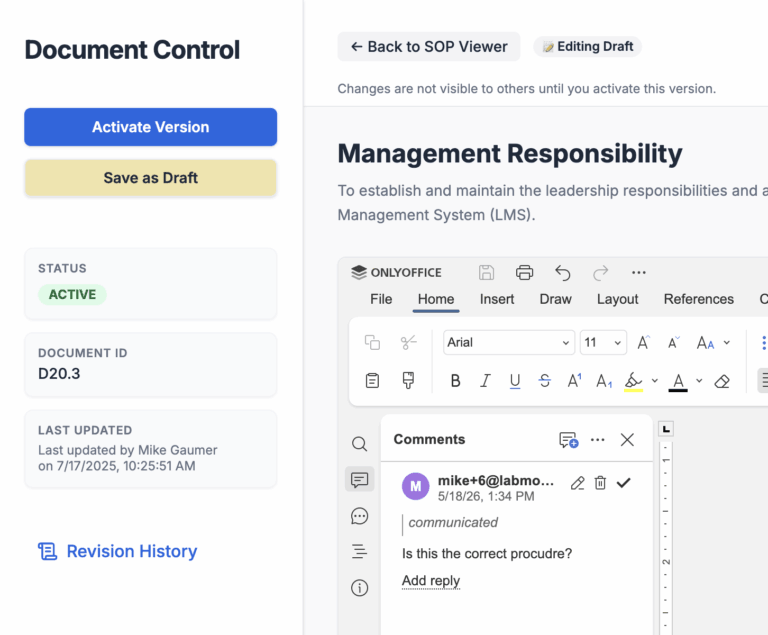
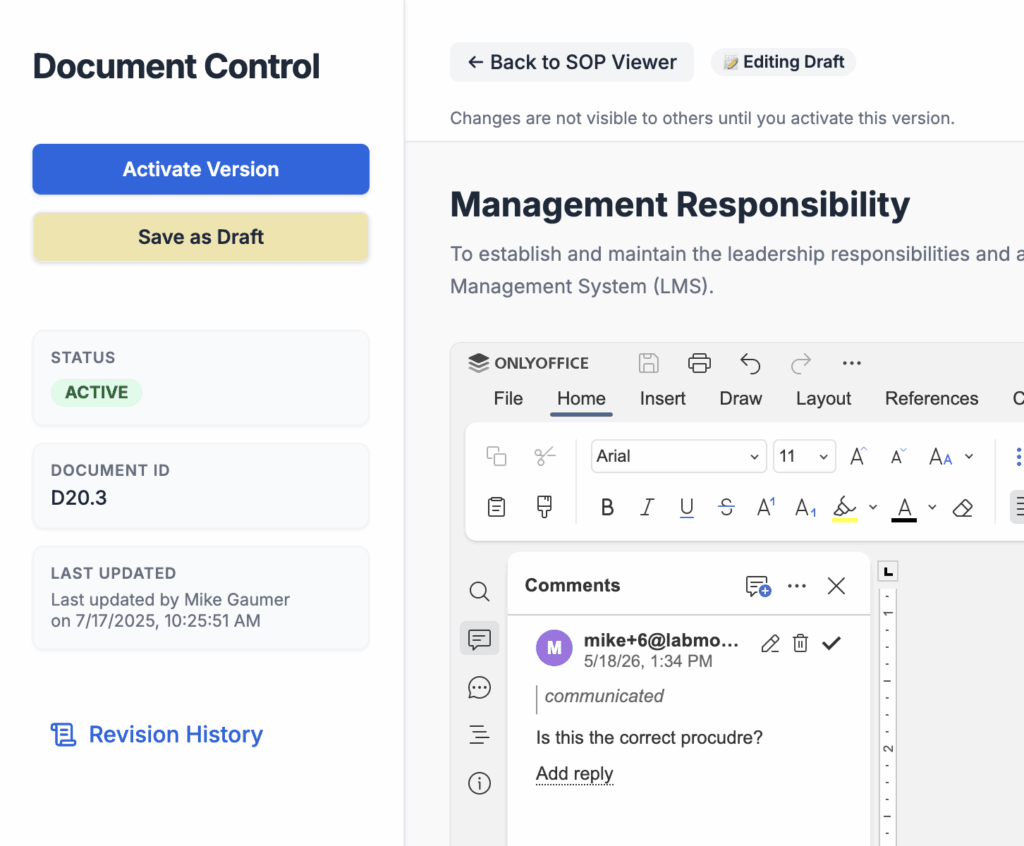
- Current SOP versions and approval history
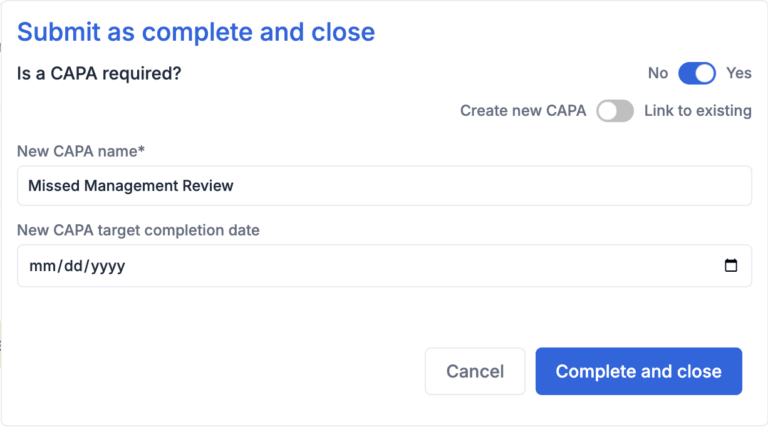
- Open and closed CAPAs with clear ownership
- Links between these elements where they overlap
That is not a report you build. That is a report your system already holds.
Strong lab compliance management software creates that visibility by design.
How LabMODO Replaces Siloed Systems
LabMODO was built for testing and calibration labs that need control without enterprise overhead. We focused on the real problem, which is disconnected systems.
Our lab compliance management software brings training, calibration, document control, and CAPA tracking into one place.
Instead of managing four tools, your team works from one system that connects:
Training Records
Assign, track, and verify training across roles and methods.
Calibration Management
Track instruments, due dates, and calibration history with attached records.
Document Control

Manage SOP versions, approvals, and read history.
Corrective Actions
Track CAPAs with ownership, status, and resolution details.
Each piece connects to the others. That connection is what auditors look for.
Explore our ISO 17025 compliance and calibration management platform.
The Hidden Risk of “We Can Pull It Together”
Many labs rely on experience to bridge system gaps.
The QA manager knows where training records live. The lab manager knows where calibration files sit. Someone else knows how CAPAs are tracked.
That works until it does not.
If one person is out or leaves, the system weakens. If an auditor asks for multiple records at once, the team scrambles.
That risk does not come from lack of effort. It comes from lack of connection.
Effective lab compliance management software removes that dependency. It puts the system inside the platform instead of inside people.
What Auditors Actually Evaluate
Auditors do not just review documents. They evaluate how your system holds together.
They watch how your team retrieves information. They look for consistency across records. They check whether your documentation aligns across training, calibration, and procedures.
If your team hesitates or produces conflicting data, auditors dig deeper.
If your team retrieves a complete picture quickly, auditors move on.
Strong lab compliance management software supports that second outcome.
Why Labs Delay Making the Change
Many labs expect software to require long implementations. They expect outside consultants and internal IT support.
That assumption slows adoption.
Independent labs need tools built for their environment. They need systems that QA managers and lab directors can manage directly.
The right lab compliance management software should let your team start with core workflows and expand over time.
If the system requires months before it shows value, it will not fit your lab.
Audit Readiness Should Not Be a Project
Many teams treat audit readiness like a deadline.
They prepare weeks in advance. They gather records. They verify documents. They clean up inconsistencies.
Then the audit ends, and the cycle resets.
That pattern exists because the system does not support daily readiness.
When your workflows connect, your records stay current. Your documentation stays aligned. Your team does not need to rebuild the system before each audit.
That is what lab compliance management software should support.
The Real Upgrade Is One System
Most labs do not need more tools. They need fewer tools that work together.
They already capture the right data. They just cannot use it efficiently under pressure.
lab compliance management software replaces scattered systems with one connected platform. It turns multi-day document assembly into a few clicks.
If your team still builds compliance reports by opening multiple systems and stitching together data, you are relying on process instead of control.
Book a live demo of LabMODO and see how our lab compliance management software helps testing and calibration labs stay audit-ready every day: https://www.labmodo.com/iso-17025-compliance-software