
Lab Compliance and Training Gaps are Money Drains
In this article
- Mistake #1: Outdated SOPs Are a Hidden Threat
- Mistake #2: Missing Training Documentation Hurts Compliance
- Mistake #3: Skipping Equipment Calibration Records
- Mistake #4: Relying on Manual Processes for Compliance
- Mistake #5: Scattered Documentation Risks Compliance
Labs make five common compliance mistakes that cost time, money, and put them at risk. These mistakes are easy to fix if you know where to look. Here’s how to spot and solve them.
Mistake #1: Outdated SOPs Are a Hidden Threat
Problem
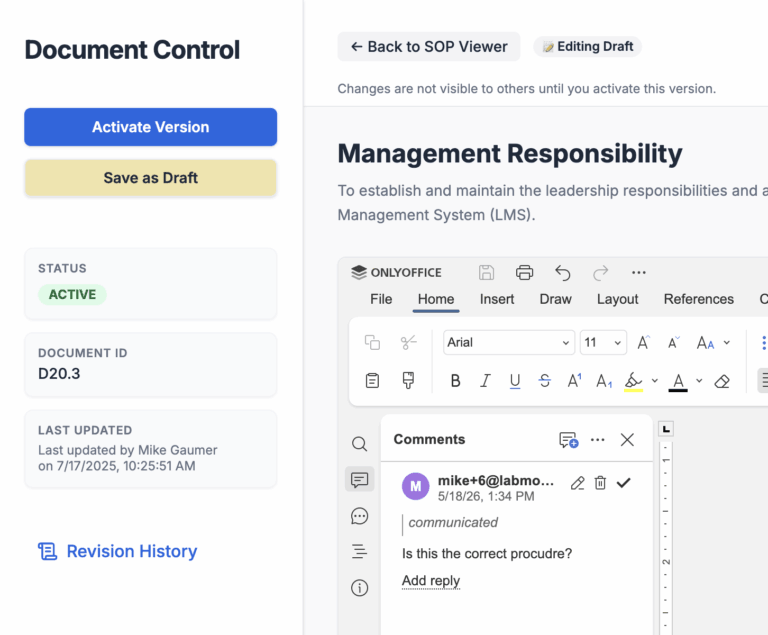
Standard Operating Procedures (SOPs) keep labs compliant, but they go out of date quickly, especially with regulatory changes. When SOPs fall behind, mistakes happen, audits fail, and compliance slips. According to the FDA’s Quality Systems Regulation, outdated SOPs are a top compliance risk.
Solution
Create a regular SOP update schedule. Make sure each SOP has clear review dates to keep everyone on the latest standards. Using a tool that tracks SOP versions and review dates can help prevent gaps and keep your team current.
Mistake #2: Missing Training Documentation Hurts Compliance
Problem
Training without documentation is a compliance red flag. Labs need detailed records for audits, and regulators require proof of completed training. Missing records put compliance at risk and can lead to fines or warnings.
Solution
Automate training tracking to ensure every certification is documented. With the right system, you get a clear view of who’s up-to-date and who needs retraining. When audit time comes, you’re prepared.
Mistake #3: Skipping Equipment Calibration Records
Problem
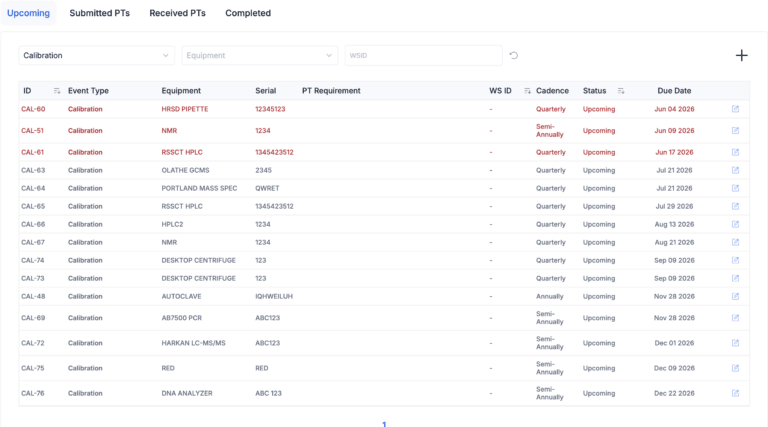
Equipment calibration impacts accuracy and data integrity. Missed calibrations can lead to inspection failures or worse—product recalls. NIST considers calibration essential for quality assurance. When calibrations are inconsistent, labs face major financial and reputational risks.
Solution
Track calibrations and set automated reminders so nothing slips. Keep a clear record of every calibration, making it easy to pull up records during inspections.
Mistake #4: Relying on Manual Processes for Compliance
Problem
Manual processes are slow, error-prone, and don’t scale well. Paper records and spreadsheets create risk and limit growth. Automation is key for improving accuracy, saving time, and reducing human error.
Solution
Switch to digital tracking for training, SOPs, calibrations, and compliance. Digitized processes make it easy to retrieve information for audits and prevent issues before they happen.
Mistake #5: Scattered Documentation Risks Compliance
Problem
Disorganized documentation makes audit prep a nightmare. When records are scattered, it’s tough to demonstrate compliance, which leads to audit failures and fines.
Solution
Centralize documentation so every file is in one place, version-controlled, and easy to access. This keeps you audit-ready without scrambling and ensures easy access to information anytime you need it.
Conclusion: Streamline Compliance to Avoid Costly Mistakes
Running a compliant lab takes discipline and organization. By addressing these five common compliance pitfalls, your lab can avoid issues and stay audit-ready. And if you’re looking for a way to simplify this process, consider tools that centralize tracking, reduce manual tasks, and keep your lab compliant with ease.
See How LabMODO Prevents These Mistakes Automatically