
An auditor asks for the calibration record tied to an instrument used in a reported result from 90 days ago. The lab director opens four spreadsheets, two shared drives, and a binder. Ten minutes later, everyone in the room feels the pressure. This is why many labs start looking for iso 17025 software.
Most labs do not fail audits because they lack records. They fail because records sit in too many places. One file lives on a desktop. Another sits in a binder. A training signoff hides in email. The person who knows where everything lives took Friday off.
That problem grows fast in labs with 5 to 50 staff. More instruments. More methods. More training events. More versions of the same spreadsheet. At some point, the system depends on memory instead of control.
Good iso 17025 software does not create extra admin work. It connects calibration, training, documents, and evidence in one place so your team can answer fast when the auditor asks.
Why Spreadsheet Systems Break Under ISO 17025
ISO 17025 requirements for testing and calibration laboratories expect labs to maintain documented evidence for calibration, training, competence, method validation, and traceability. Auditors can request those records at any time.
Spreadsheets can store lists. Shared drives can store files. Binders can store signatures. None of those tools connect the full story.
That gap matters during audits. An auditor rarely asks for one isolated record. They ask for the chain behind a result.
They may want:Which instrument produced the result
- Whether calibration stayed current at the time of use
- Which analyst ran the test
- Whether training stayed curren
- Which SOP version applied that day
- Whether corrective actions affected the method
Now your team starts hunting across folders and tabs.
Labs that run compliance through spreadsheets and shared drives often spend 2 to 3 days preparing documentation before each audit cycle. That time usually comes from QA managers and lab leaders who already carry full workloads.
What ISO 17025 Software Should Actually Do
Many software vendors sell complexity. Small and midsize labs do not need another giant system that needs six months and an IT project.
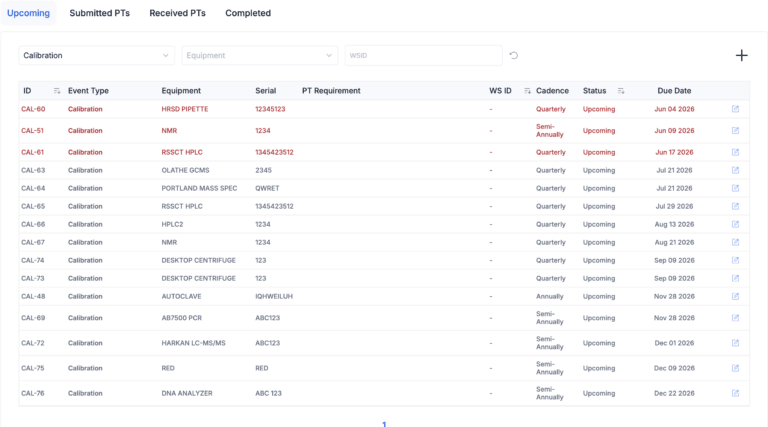
They need iso 17025 software built for testing and calibration labs. It should solve record control first. That means one system should let you:Track instruments and calibration due dates
- Store calibration certificates with the asset record
- Assign and track staff training
- Control SOP versions and approvals
- Show who completed what, and when
- Pull evidence in minutes, not hours
That is the real value. Faster retrieval. Cleaner accountability. Less stress. If software cannot help you answer an auditor’s question in under a minute, it missed the point.
How LabMODO Replaces Six Separate Systems
LabMODO was built for independent testing and calibration labs that need control without enterprise overhead. We did not build it for pharma and then rename fields.
Our iso 17025 software gives labs one place to manage the daily controls auditors inspect later.

Instead of separate tools, you manage:
Calibration Management
Track assets, due dates, service history, and attached certificates. See what needs action before it becomes overdue.
Training Records
Assign training by role, method, or document. Keep evidence tied to each employee.
Document Control
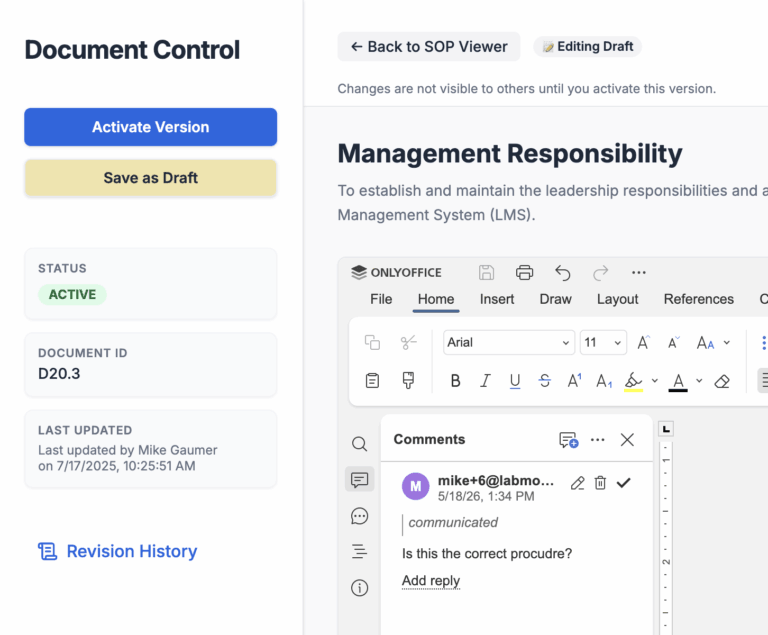
Maintain current SOPs, revision history, approvals, and read receipts.
Compliance Evidence
Pull records during an audit without chasing five people.
You already do this work. LabMODO connects it.
See our ISO 17025 compliance software for labs.
The Hidden Cost of “One Person Knows Everything”
Every lab has that person. They know where the old calibration files sit. They know which spreadsheet has the latest training status. They know the naming trick used in the shared drive. They know which binder has the signed form.
That person often looks like a hero. They also represent risk.
If they leave, get sick, or go on vacation during audit week, your control system goes with them.
Strong iso 17025 software removes that dependency. It puts process inside the system instead of inside one employee’s head.
That shift matters more than most labs realize. It protects continuity. It shortens onboarding. It reduces panic when key people are out.
What Auditors Notice Fast
Auditors know the difference between a controlled lab and a patchwork lab. They notice when a team can retrieve calibration records quickly. They notice when training status is clear. They notice when document versions match what sits on the bench.
They also notice hesitation, confusion, and conflicting files.
A2LA accreditation requirements for testing labs place heavy weight on competence, traceability, and documented systems. Your records do not need fancy graphics. They need order, accuracy, and speed.
That is where iso 17025 software earns its keep.
How to Choose ISO 17025 Software Without Buying a Monster
Some labs wait too long because they assume every software project will hurt.
That concern is fair. Many systems demand consultants, IT tickets, and months of setup.
But smaller labs should screen vendors with simple questions:Can we start with calibration and documents first?
Can our QA manager run this without internal IT? Can we retrieve records during an audit in seconds? Was this built for testing and calibration labs? Can we grow into more features later? If the answer sounds vague, move on.
The right iso 17025 software should feel practical on day one. You should see value early, not after a long implementation.
Audit Readiness Is a Daily System
Many labs treat audit readiness like a seasonal project. They scramble three weeks before the visit. They update logs, chase signatures, and clean folders.
That cycle repeats because the underlying system never changed.
Better labs treat readiness as daily operating discipline. Records stay current. Due dates stay visible. Evidence stays attached to the right source.
That is what iso 17025 software should support. Not once a year. Every week.
When you run that way, audits become verification instead of rescue work.
The Real Upgrade Is Control
Spreadsheets are not evil. Binders are not evil. Shared drives are not evil.
They just stop working once complexity passes a certain point.
When records live across six places, every audit request turns into a search mission. When records live in one controlled system, the same request becomes routine.
That is why labs move to iso 17025 software. Not for tech. For control.
If your team still prepares for audits by opening folders, updating tabs, and hoping nothing got missed, it may be time to change the operating model.
Book a live demo of LabMODO and see how our iso 17025 software helps testing and calibration labs stay ready year-round: https://labmodo.com/iso-17025-compliance-software/