
ISO Compliance Is a Beast
ISO certification sounds good—until you’re in the trenches.
SOPs get lost in spreadsheets. Training records are incomplete. Audits turn into last-minute chaos. The process is so overwhelming that some labs just wing it and hope for the best (spoiler: that doesn’t work).
But here’s the thing: ISO compliance isn’t hard because of the rules—it’s hard because labs use broken systems to manage it.
Let’s fix that. This guide breaks down ISO certification, what auditors look for, and how to simplify everything.
What Is ISO Certification and Why Do Labs Need It?
ISO certification proves your lab meets international quality and compliance standards. It’s not legally required, but if you want to land high-value contracts, pass regulatory audits, or just run a legit operation, it’s a must.
The most common certifications for labs:
ISO 9001 – Focuses on quality management and consistency.
ISO 17025 – Ensures labs can produce accurate, reliable test results.
ISO 13485 – For labs handling medical devices and related testing. Every ISO standard has one goal: Make sure your lab follows clear, documented processes so results are consistent, training is tracked, and audits don’t turn into fire drills.
🔗 Want to simplify ISO compliance? Check out LabMODO’s solution HERE.
Step One: Build a Management System
ISO requires a documented system for SOPs, training, and compliance records. Most labs try to handle this with:
- ❌ Excel spreadsheets
- ❌ Google Docs
- ❌ Printed SOP binders (yes, still a thing)
This works… until it doesn’t.
🔹 What ISO Wants:
– ✅ Clear, structured SOPs that employees can follow.
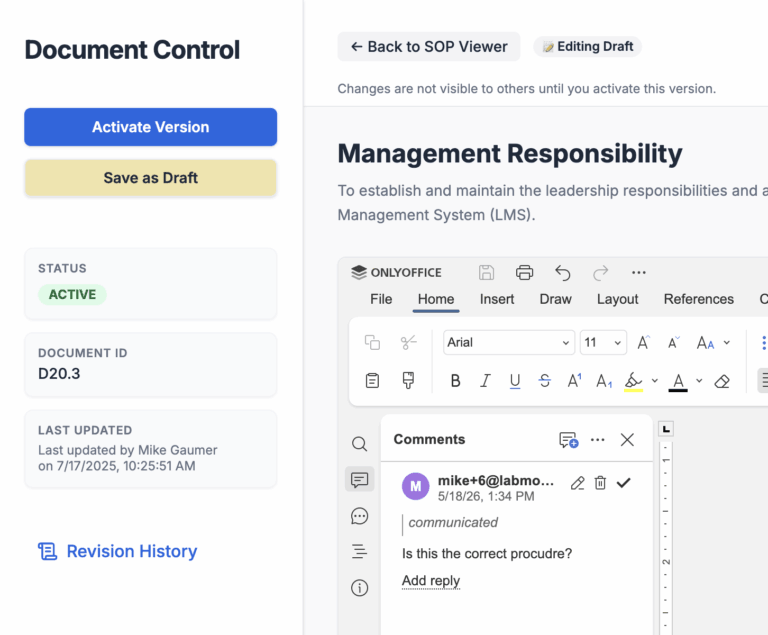
– ✅ A document control system—no rogue, outdated SOPs floating around.
– ✅ A training log that proves staff are qualified for their jobs.
🔹 How Labs Mess It Up:
SOPs live in random places (Google Drive, email attachments, desk drawers).
No one knows if they have the latest version of an SOP.
Training records are in spreadsheets no one updates.
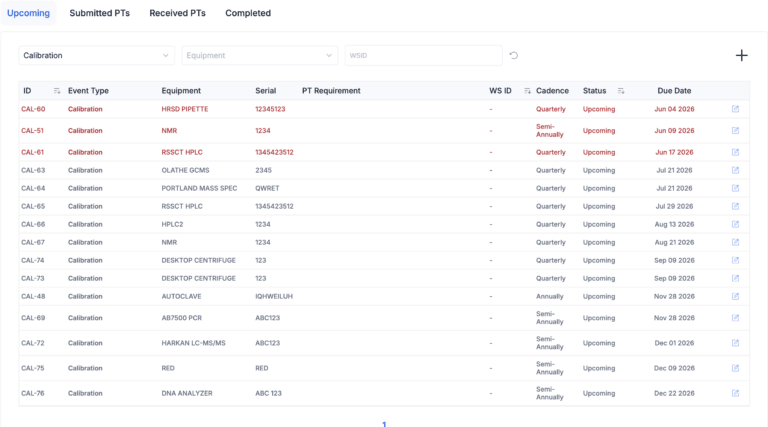
📌 The Fix: Move everything into one system where SOPs, training, and compliance records are updated automatically.
SURPRISE: LabMODO does this for you.
Step Two: Internal Audits – Catch Problems Before ISO Does
Before getting ISO certified, your lab must do an internal audit. This is a dry run to catch problems before an external auditor does.
🔹 What ISO Looks For:
- ✅ Every SOP has a clear owner who updates it.
- ✅ Training records match job roles. No “we trained them… we think?” situations.
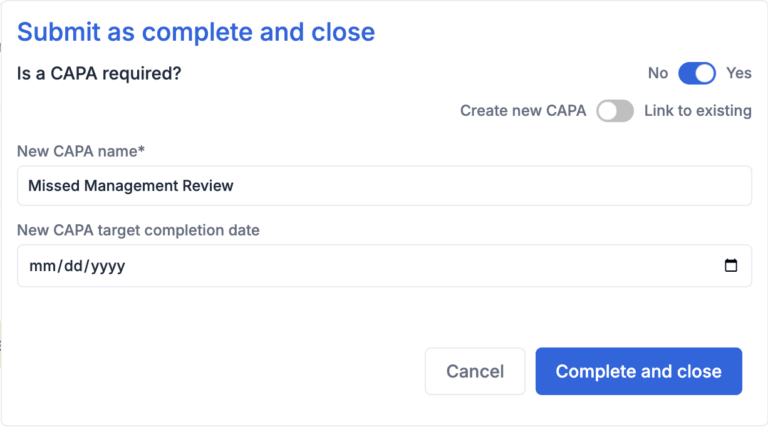
- ✅ Non-conformities (mistakes, missing docs) are identified and corrected.
🔹 How Labs Mess It Up:
Internal audits happen too late—fixing problems in a rush never works.
No system to track who updated what—auditors love to ask, “Who changed this and why?”
Training logs don’t match employee access—ISO will call this out.📌 The Fix: Automate tracking for SOP updates, employee training, and internal reviews.
PRO TIP: First time? Hire an expert to help with your first internal audit. Start with Brenda at Coffeepot Consulting.
Step Three: The ISO Certification Audit – What Really Happens
An external auditor will visit your lab. Their job is to poke holes in your system. Here’s what they’ll focus on:
🔹 Stage 1: Documentation Review
Are your SOPs complete and controlled (not a mix of Word docs, PDFs, and paper copies)?
Do training records prove employees are certified to do their tasks?
Is there a clear process for updating SOPs and fixing mistakes?🔹 Stage 2: On-Site Inspection
Auditors will interview employees—if someone says “I don’t know” when asked about a process, that’s bad.
They’ll look for outdated SOPs—if someone is using an old version, that’s bad.
They’ll ask for proof of compliance—if you can’t pull records in seconds, that’s bad.
🔹 How Labs Mess It Up:
No centralized SOP management—auditors find old, conflicting documents.
Employees aren’t trained on updates—someone gives the wrong answer in an interview.
Scrambling to find documents—wasting an auditor’s time is a fast way to fail.
📌 The Fix: With LabMODO, every document, training record, and SOP update is tracked and ready—no scrambling. See how it works.
Step Four: Staying ISO Certified
Getting certified is one thing. Staying compliant is another.
🔹 ISO Requires Ongoing Compliance:
- ✅ Annual surveillance audits – You’ll be checked every year.
- ✅ Employee training updates – No training = non-compliance.
- ✅ Documented SOP revisions – ISO wants to see continuous improvement.
🔹 How Labs Mess It Up:
No process for ongoing training—employees fall behind.
SOPs are not updated when processes change.
Audit prep happens too late—labs scramble before surveillance audits.
📌 The Fix: Set SOP reviews and training refreshers on autopilot. LabMODO handles this effortlessly.
ISO Compliance: Stress-Free or a Total Nightmare—Your Call
ISO certification is a pain if you rely on spreadsheets, emails, and outdated docs. But it’s easy if everything is in one system that tracks SOPs, training, and compliance automatically.
📌 Want to make ISO compliance simple? Get a demo of LabMODO today.