
The SOP Tug-of-War
Labs create SOPs for one of two reasons:
To meet compliance standards. To actually help their team do their job.
Here’s the problem—those two goals don’t always align. Compliance demands exhaustive detail, but teams need simplicity. If an SOP is too complex, no one follows it. If it’s too simple, it doesn’t meet regulations.
Labs are stuck between what the lawyers want and what scientists need. But it doesn’t have to be that way. You can build SOPs that check both boxes. Here’s how.
1. Compliance Wants “More,” but Your Team Needs “Less”
Accrediting bodies like CLIA, CAP, and the Department of Defense don’t want SOPs to be simple. They want them to be exhaustive.
But let’s be real. No one on your team is reading a 20-page document before using a centrifuge.
How to Fix It
Split SOPs into two layers: One version meets compliance (the full document). The other is a tactical, step-by-step workflow for actual use.Use visual guides: Instead of writing three paragraphs on PPE, include a simple table or an image.Make SOPs modular: Break complex SOPs into sections. Users should be able to find what they need without wading through 15 pages.Example:
A lab required employees to follow a 14-page SOP for sample handling. Employees ignored it. Instead, they created a one-page visual checklist with only critical steps. Mistakes dropped by 40%.
2. If No One Reads the SOP, It’s Useless
A compliance-friendly SOP means nothing if your team doesn’t follow it.
Signs Your SOPs Are Too Complex
People guess instead of reading them.
The team asks the same questions over and over.
Audits reveal compliance gaps because procedures weren’t followed.
How to Fix It
- Use plain language: If a sentence sounds like a lawyer wrote it, rewrite it.Cut unnecessary words: If a step can be said in five words instead of fifteen, do it.
- Ask your team: Before finalizing an SOP, run it by the people who will use it. If they struggle with it, rewrite it. PRO TIP: Use AI tools. I suggest Grammarly.
Example
A medical testing lab rewrote its SOPs using bullet points instead of paragraphs. Training time for new hires dropped by 30%.
3. Build SOPs That Work for Everyone
You need an SOP system that meets compliance and helps your team work efficiently. It’s not one or the other—it’s both.
How to Fix It:
Make compliance happy with a full SOP (detailed, formatted, meets all accreditation standards).
Make employees happy with a workflow guide (short, actionable, includes visuals).
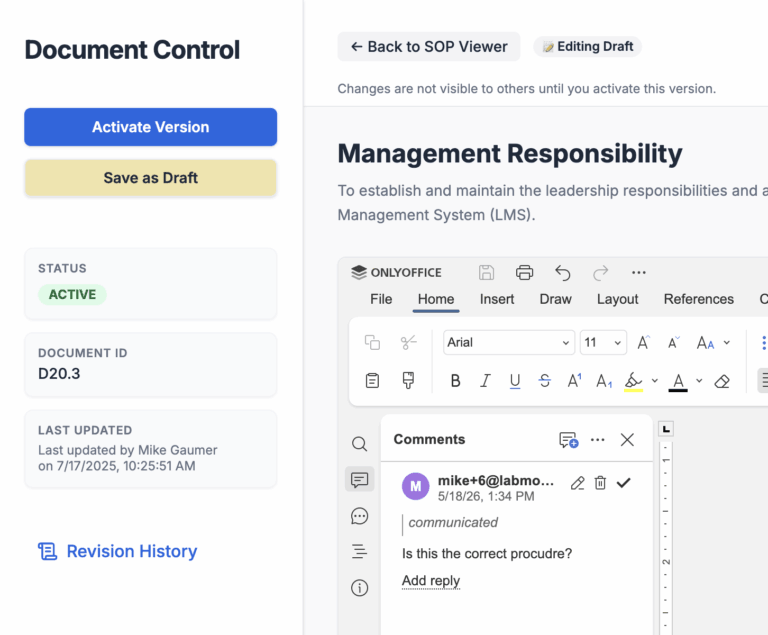
Automate version control so updates are instant and everyone sees the latest SOP.
Tie SOPs to training so employees are automatically assigned what they need.
Example
A biotech company created interactive SOPs with embedded videos and step-by-step guides. Employees followed procedures twice as often, reducing errors by 50%.
Closing: You Can Have Both—If You Build Smarter
The best labs don’t choose between compliance and usability—they build SOPs that do both.
If your team is ignoring SOPs, the solution isn’t forcing them to read 20-page documents. The solution is building SOPs that are actually usable.
That’s what LabMODO helps labs do. Automate SOP management, streamline compliance, and create workflows your team will actually follow.
Because the best SOPs aren’t just compliant—they’re useful.